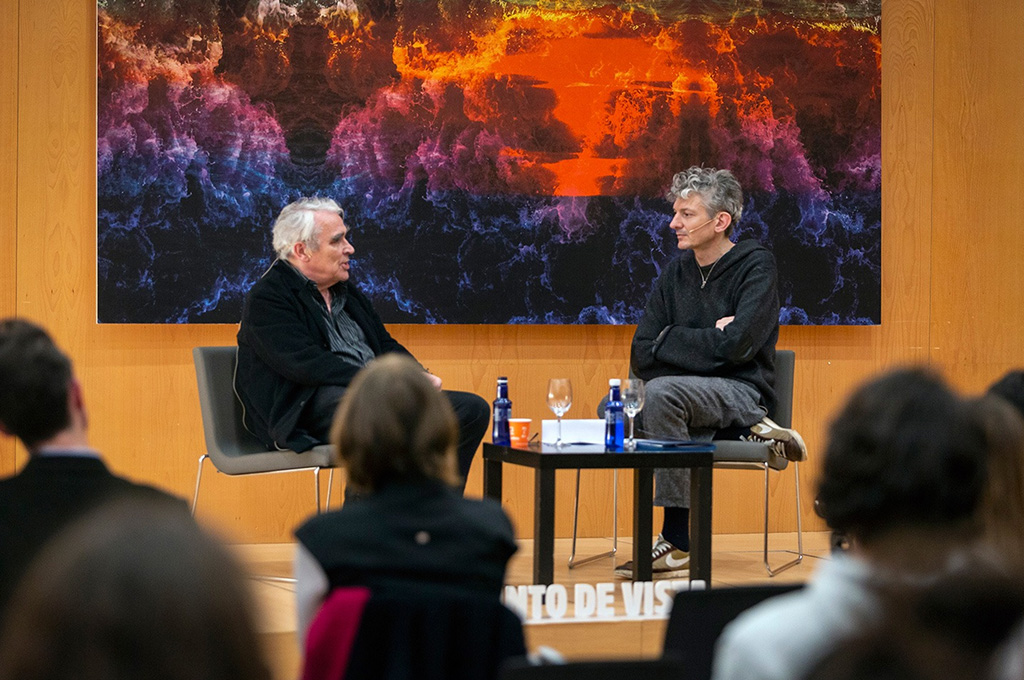




2025
DIRDIRA LAB
Artistic Director, DIRDIRA LAB Mediation Project and Program Development Laboratory (2022-currently).
Artistic Director, DIRDIRA LAB Mediation Project and Program Development Laboratory (2022-currently).
Dirdira Lab is a training and development laboratory for artistic and experimental films aimed at filmmakers and producers looking for a space to work on their projects collectively alongside internationally renowned professionals.
ARABA MUGIMENDUAN
Film curator, Arkabia. (2025-currently).
Film curator, Arkabia. (2025-currently).
TRAMA
Co-curator, TRAMA program, Artium Museum.
Co-curator, TRAMA program, Artium Museum.
This second edition of TRAMA explores the moving image and its relationship with other disciplines of art and thought. It therefore offers a programme centred on ecofeminism and environmental justice.
Faced with the constant destruction of diverse forms of life because of extractive policies, it is necessary to reflect collectively on restorative practices for what has been damaged. Chicana writer and activist Gloria Anzaldúa presents this exercise as an act of joining pieces together in a new way, as part of an ongoing process of doing and undoing. According to the author, there is no final resolution, only a process of permanent healing. This programme therefore invites us to focus our attention on ecocritical artistic research practices that expand and deepen our relationship with the land and the conflicts it is undergoing.
SAMSARA
Curator, Samsara exhibition• Centro de Cultura Contemporánea de Barcelona (2027).
Curator, Samsara exhibition• Centro de Cultura Contemporánea de Barcelona (2027).
ENCUENTROS DE PAMPLONA
Programming committee member, "Encuentros de Pamplona", International Biennial of culture, art and thought. (2023-currently).
Programming committee member, "Encuentros de Pamplona", International Biennial of culture, art and thought. (2023-currently).
ZINEMA GAUR
Film curator: ZINEMA GAUR program. Centro Cultural Montehermoso.
Film curator: ZINEMA GAUR program. Centro Cultural Montehermoso.
Elemento 6
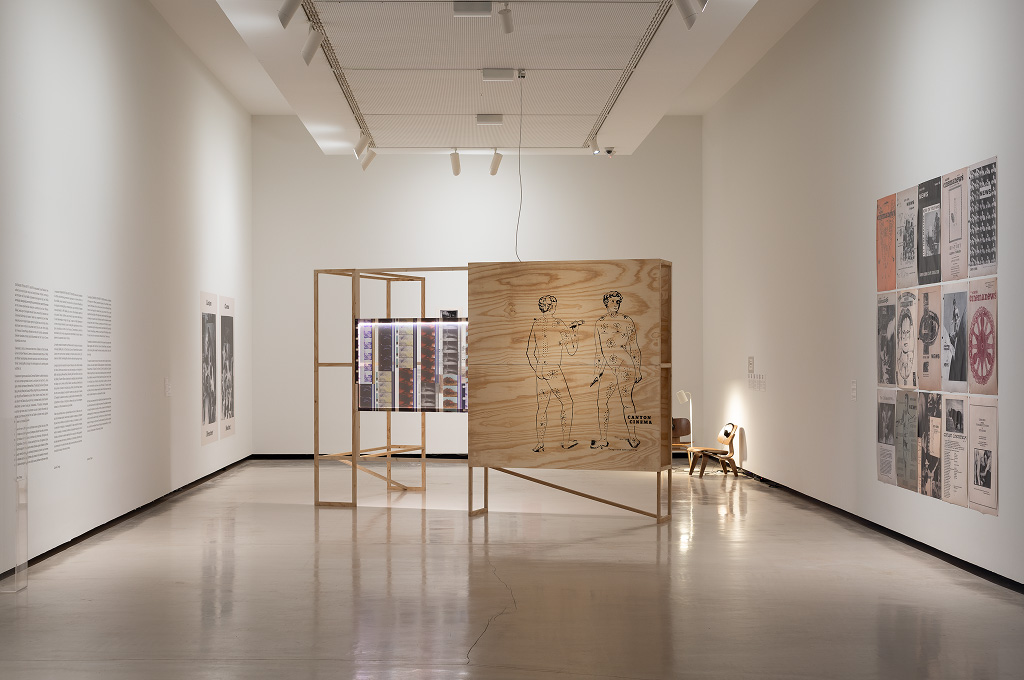
2024
LAS CARAS DE AGNÉS
Curator of the seminar “Las Caras de Agnès” on Agnès Varda, Institut d'Humanitats (Barcelona).
Curator of the seminar “Las Caras de Agnès” on Agnès Varda, Institut d'Humanitats (Barcelona).
TRAMA
Curator of the TRAMA program, ARTIUM Museum. With Sara Torres, Alex Reynolds, Julia Spínola, Valentina Alvarado Matos, COU and Catarina Vasconcelos.
Curator of the TRAMA program, ARTIUM Museum. With Sara Torres, Alex Reynolds, Julia Spínola, Valentina Alvarado Matos, COU and Catarina Vasconcelos.
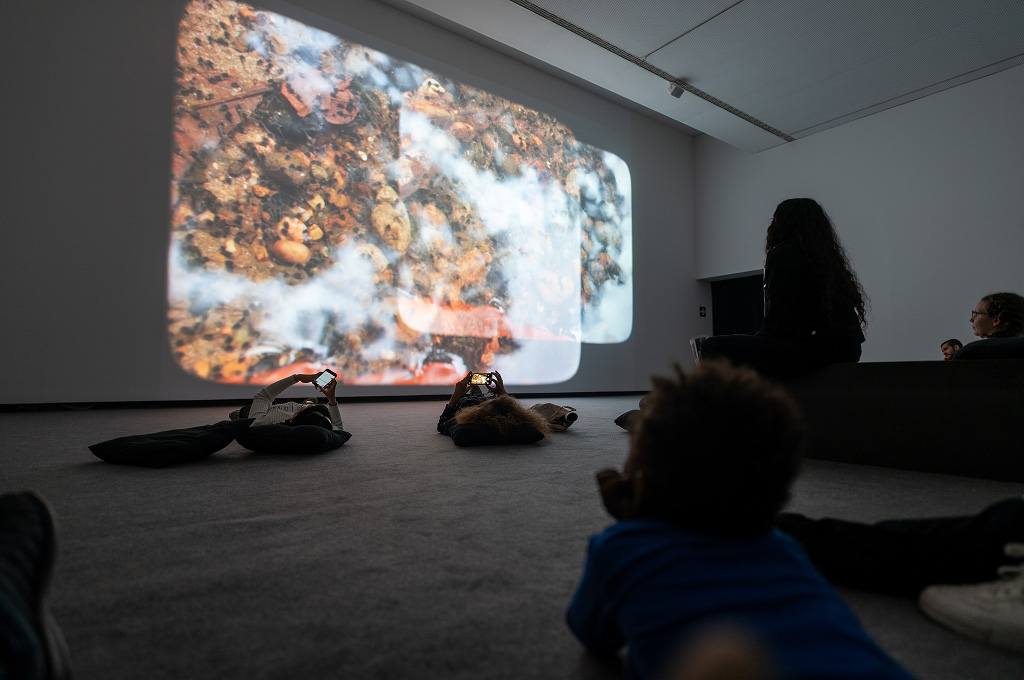
2023
ENCUENTROS DE PAMPLONA
Programming team of "Encuentros de Pamplona" (actually).
Programming team of "Encuentros de Pamplona" (actually).
SOMEWHERE FROM HERE TO HEAVEN
Film curator, "Somewhere from Here to Heaven" film series.
Film curator, "Somewhere from Here to Heaven" film series.
The contemporary series focuses on the exhibition artists: Ana Vaz, Ben Rivers, Apichatpong Weerasethakul and Eduardo Williams, who enter into dialogue with Bruce Baillie’s own films. The selected films propose a game, a possible conversation between the themes and sensitivities that they share with each other, such as the exploration of light and colour in nature, the fascination with new forms of freedom or the discovery of the most spiritual essence of things.
This historical series offers the opportunity to revisit the great fundamental classics of the American avant-garde (Maya Deren, Marie Menken, Bruce Conner or Larry Jordan) as well as films about the political and social movements of the time (Lenny Lipton, James Broughton, Tom Palazzolo, Dan Draisin), including great films made by a new generation of female filmmakers who brought a feminist look to a more personal and avant-garde cinema (Chick Strand, Alice Anne Parker, Gunvor Nelson, Janis Crystal Lipzin).
ACTIVAR LOS PODERES DE OTRO CUERPO
Curator of the series “Activating the powers of another body”. Arts Santa Mònica (Barcelona).
Curator of the series “Activating the powers of another body”. Arts Santa Mònica (Barcelona).
As part of the exhibition Full of Holes, the series Activating the Powers of Another Body invites participants to collectively “traverse” this journey, which includes screenings, listening sessions, performances, and meditations. While the first part of this series focuses on sight and relearning how to see, the second part explores the possibilities of sound, listening, and voice to create images and shape reality.
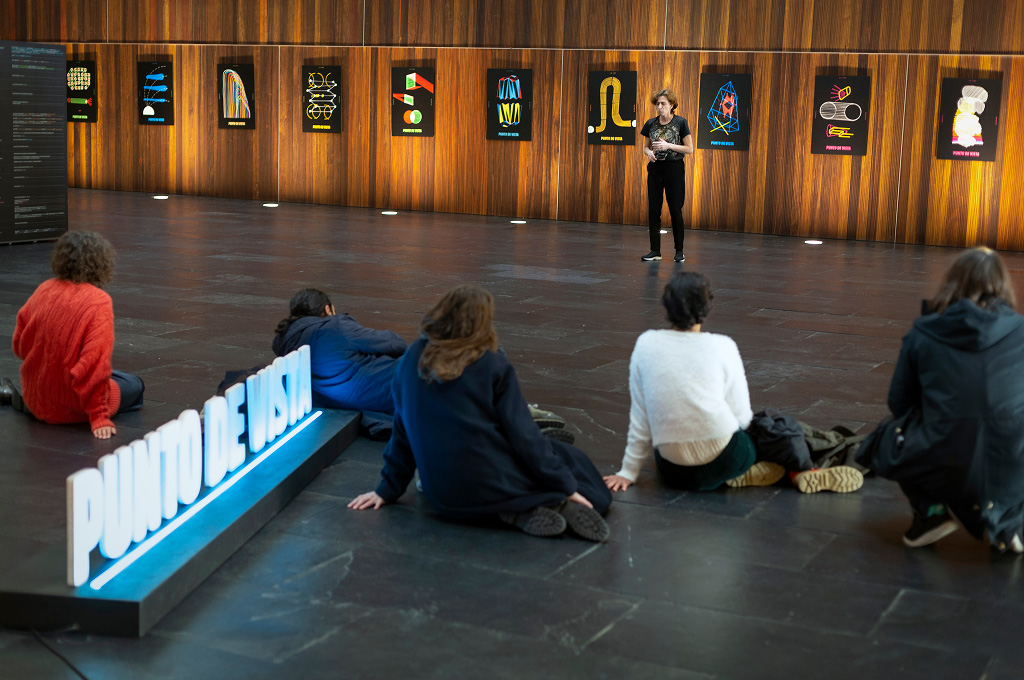
2022
SOMEWHERE FROM HERE TO HEAVEN
Curator, Somewhere from here to Heaven exhibition on Bruce Baillie and his influence, with new work by Ben Rivers, Ana Vaz, Apichatpong Weerasethakul and Eduardo Williams. Azkuna Zentroa.
Curator, Somewhere from here to Heaven exhibition on Bruce Baillie and his influence, with new work by Ben Rivers, Ana Vaz, Apichatpong Weerasethakul and Eduardo Williams. Azkuna Zentroa.
HIBRIDALAB
Program coordinator.
Program coordinator.
CLAMOR
Curator of the Edurne Rubio exhibition “Clamor”. Room Z, ARTIUM Museum.
Curator of the Edurne Rubio exhibition “Clamor”. Room Z, ARTIUM Museum.
FLUID FRONTIERS
Curator of Ephraim Asili's exhibition “Fluid Frontiers”. Room Z, ARTIUM, Museum.
Curator of Ephraim Asili's exhibition “Fluid Frontiers”. Room Z, ARTIUM, Museum.
GOLD 20. FUNDIR Y PARAR
Curator of the exhibition by Ainara Elgoibar “Gold 20. Melt and Stop”. Room Z, ARTIUM.
Curator of the exhibition by Ainara Elgoibar “Gold 20. Melt and Stop”. Room Z, ARTIUM.
SHE RECALIBRATES
Curator of the Aura Satz exhibition “She Recalibrates”. Room Z, ARTIUM Museum.
Curator of the Aura Satz exhibition “She Recalibrates”. Room Z, ARTIUM Museum.
OASIS
Curator of the OASIS cycle at Batalha Cinema Center in Oporto (Portugal).
Curator of the OASIS cycle at Batalha Cinema Center in Oporto (Portugal).

2021
PUNTO DE VISTA
Artistic Director of Punto de Vista, the International Documentary Film Festival of Navarra. Featuring retrospective cycles on the work of Amos Vogel, Nancy Holt, Forensic Architecture, Robert Fenz, Pedro G. Romero, among others.
Artistic Director of Punto de Vista, the International Documentary Film Festival of Navarra. Featuring retrospective cycles on the work of Amos Vogel, Nancy Holt, Forensic Architecture, Robert Fenz, Pedro G. Romero, among others.
The complete program for the 2021 edition:
UN FILM DRAMATIQUE
Curator of the exhibition of Eric Baudelaire "A Dramatic Film". Room Z, ARTIUM Museum.
Curator of the exhibition of Eric Baudelaire "A Dramatic Film". Room Z, ARTIUM Museum.
VIVIAN’S GARDEN
Curator of the Rosalind Nashashibi exhibition “Vivian’s Garden”. Room Z, ARTIUM Museum.
Curator of the Rosalind Nashashibi exhibition “Vivian’s Garden”. Room Z, ARTIUM Museum.
PARAÍSO
Curator of the exhibition by Maddi Barber and Marina Lameiro “Paradise”. Room Z, ARTIUM Museum.
Curator of the exhibition by Maddi Barber and Marina Lameiro “Paradise”. Room Z, ARTIUM Museum.
CARDÓN CARDINAL
Curator of the exhibition by Patricia Esquivias “Cardón Cardinal”. Room Z, ARTIUM Museum.
Curator of the exhibition by Patricia Esquivias “Cardón Cardinal”. Room Z, ARTIUM Museum.
CORTADA
Programming Coordinator of the CORTADA festival, EHU/UPV, Vitoria-Gasteiz.
Programming Coordinator of the CORTADA festival, EHU/UPV, Vitoria-Gasteiz.

2020
PUNTO DE VISTA
Artistic Director of Punto de Vista, the International Documentary Film Festival of Navarra. Featuring retrospective cycles on Ute Aurand, Helga Fanderl, Jeannette Muñoz and Renate Sami, Tacita Dean, Francis Alÿs, Beatriz Muñoz Santiago, and Anne Charlotte Robertson, among others.
Artistic Director of Punto de Vista, the International Documentary Film Festival of Navarra. Featuring retrospective cycles on Ute Aurand, Helga Fanderl, Jeannette Muñoz and Renate Sami, Tacita Dean, Francis Alÿs, Beatriz Muñoz Santiago, and Anne Charlotte Robertson, among others.
The complete program for the 2020 edition:

2019
PUNTO DE VISTA
Artistic Director of Punto de Vista, the International Documentary Film Festival of Navarra. Featuring retrospective cycles on the work of Jonathan Schwartz, Marcia Hafiff, Iván Argote, Marie Losier, Guy Sherwin, among others.
Artistic Director of Punto de Vista, the International Documentary Film Festival of Navarra. Featuring retrospective cycles on the work of Jonathan Schwartz, Marcia Hafiff, Iván Argote, Marie Losier, Guy Sherwin, among others.
The complete program for the 2019 edition:
INTERNATIONAL CURATORIAL MEETING
Curator of the International Curatorial Meeting. Montehermoso Cultural Center.
Curator of the International Curatorial Meeting. Montehermoso Cultural Center.
ZINEMA GAUR
Programmer of the Cinema Today Cycle. Centro Cultural Montehermoso (2016 – 2019).
Programmer of the Cinema Today Cycle. Centro Cultural Montehermoso (2016 – 2019).

2018
PUNTO DE VISTA
Artistic Director of Punto de Vista, the International Documentary Film Festival of Navarra. Featuring retrospective cycles on the work of Trinh T. Minh-ha, José Antonio Sistiaga, P. Adams Sitney, and Rebecca Baron, among others.
Artistic Director of Punto de Vista, the International Documentary Film Festival of Navarra. Featuring retrospective cycles on the work of Trinh T. Minh-ha, José Antonio Sistiaga, P. Adams Sitney, and Rebecca Baron, among others.
The complete program for the 2018 edition:
MUSEUM OF CLOUDS
Co-curator of the "Museum of Clouds" Cycle with Andrea Lissoni and Carly Whitefield, Tate Modern, London.
Co-curator of the "Museum of Clouds" Cycle with Andrea Lissoni and Carly Whitefield, Tate Modern, London.

2016
ALL MY LIFE: THE FILMS OF BRUCE BAILLIE
Curator of the series "All My Life: The Films of Bruce Baillie" within the Art of the Real series at Lincoln Center in New York.
Curator of the series "All My Life: The Films of Bruce Baillie" within the Art of the Real series at Lincoln Center in New York.
STILL, LIFE
Curator of the "Still, Life: Bruce Baillie" series for the Tate Modern in London.
Curator of the "Still, Life: Bruce Baillie" series for the Tate Modern in London.
ALL MY LIFE: THE FILMS OF BRUCE BAILLIE
Curator of the series "All My Life: The Films of Bruce Baillie" for the National Gallery of Art in Washington.
Curator of the series "All My Life: The Films of Bruce Baillie" for the National Gallery of Art in Washington.
BRUCE BAILLIE
Curator of the program about Bruce Baillie. Tabakalera.
Curator of the program about Bruce Baillie. Tabakalera.
This program crosses part of the life and work of Bruce Baillie, the American Quijote whose mission has been always the search of the spiritual essence, beyond the surfaces, a world increasingly aligned and confused.
THE WEST COAST
Curator of "The West Coast" series. A series on the Californian film avant-garde for the L’âge d’or festival in Brussels.
Curator of "The West Coast" series. A series on the Californian film avant-garde for the L’âge d’or festival in Brussels.
From the late 1950s until today, the American West coast has been the cradle of a major movement within avant-garde cinema. Centered around Canyon Cinema, one of the most important cooperatives distributing independent, avant-garde, underground or experimental film – co-founded in San Francisco by filmmakers Bruce Baillie and Chick Strand (both honoured by this program) – the West Coast scene was defined by its remarkable diversity of styles and subjects and was one of the principal agents of renewal in American cinema.

2015
FESTIVAL AMBULANTE
Program codirector. Festival Ambulante (México).
Program codirector. Festival Ambulante (México).
ÁREA DE CINE
Film programmer. Digital Culture Center (Mexico).
Film programmer. Digital Culture Center (Mexico).
NUEVOS CAMINOS Y OTROS ATAJOS PARA LA PARTICIPACIÓN COLECTIVA
Curator of the multidisciplinary laboratory in Oaxaca, (Mexico) for Ambulante.
Curator of the multidisciplinary laboratory in Oaxaca, (Mexico) for Ambulante.

2013
FESTIVAL 4+1
Programmer of the 4+1 Festival. Fundación Mapfre (2022-2013).
Programmer of the 4+1 Festival. Fundación Mapfre (2022-2013).
CINE, PERCEPCIÓN Y ESTADOS ALTERADOS: BEN RIVERS, BEN RUSSELL
Curator of the series “Cinema, Perception and Altered States: Ben Rivers, Ben Russell”. La Casa Encendida (Madrid), Cineteca Gallega (A Coruña), Festival S8 (A Coruña), Spain.
Curator of the series “Cinema, Perception and Altered States: Ben Rivers, Ben Russell”. La Casa Encendida (Madrid), Cineteca Gallega (A Coruña), Festival S8 (A Coruña), Spain.
CINE, CIENCIA Y VIDA ARTIFICIAL
Curator of the "Cinema, Science and Artificial Life" series for the Telefónica Foundation (Madrid).
Curator of the "Cinema, Science and Artificial Life" series for the Telefónica Foundation (Madrid).
Programmed as a parallel activity to the exhibition Art and Artificial Life. LIFE 1999 – 2012, this series showcases great classics and contemporary films such as Kurt Neumann’s The Fly or Jean Painleve’s L’Hippocampe, to discuss the relationship, both beneficial and malevolent, between cinema and science, with special emphasis on the portrayal of genetics, robotics and artificial life.

2012
EL CINE (EN PARÍS) EN LOS TIEMPOS DEL CUBISMO
Curator of the series “El cine (en París) en los tiempos del cubismo” for the Telefónica Foundation (Madrid).
Curator of the series “El cine (en París) en los tiempos del cubismo” for the Telefónica Foundation (Madrid).
The series aims to provide a cinematic context for the years of development and evolution of Cubism with a wide program of films that transports us to early 20th-century Paris.

2011
HEAVEN ON EARTH, THE SPIRITUALLY IN THE AMERICAN AVANT-GARDE CINEMA.
Curator of the project: “Heaven on Earth: Spirituality in American Avant-Garde Cinema.” 12 programs including works by Phil Solomon, Zoe Beloff, Nathaniel Dorsky, and Robert Beavers. Exhibited at La Casa Encendida and the CGAI, Spain.
Curator of the project: “Heaven on Earth: Spirituality in American Avant-Garde Cinema.” 12 programs including works by Phil Solomon, Zoe Beloff, Nathaniel Dorsky, and Robert Beavers. Exhibited at La Casa Encendida and the CGAI, Spain.
According to announcements, the expansion of a new consciousness will soon arrive and we will be able to travel through new dimensions. This cycle brings us closer to four American filmmakers who wanted to experience it first through cinema.
Zoe Beloff acts as a medium between the real and the imaginary, and her unique, sometimes stereoscopic universe defines the relationship between the different invisible planes in which we live. Phil Solomon, a long-time collaborator of Stan Brakhage, uses numerous techniques to represent the reflective abstraction and emotion of those who are constantly searching. Robert Beavers elegantly combines the aesthetics of the natural world and art, and Nathaniel Dorsky manages to reveal the internal pulse of the elements and the cadence of Californian light, demonstrating that the experimental is not at odds with beauty.
THE FORGOTTEN SPANISH NON-FICTION CINEMA AND IT’S RENEWAL
Curator of the cycle “The forgotten Spanish non-fiction cinema and its renewal” for the Anthology Film Archives (New York).
Curator of the cycle “The forgotten Spanish non-fiction cinema and its renewal” for the Anthology Film Archives (New York).
Spanning four decades of Spanish non-fiction cinema, this series highlights the connections between generations, but also the abyss that exists because of the political history of this land. This array of portraits and explorations depicting collective and individual identity generates a vivid dialogue between works from the past – by filmmakers including Luis Buñuel and José Val del Omar – and a new generation that is working with a radically new digital language. With passion, irreverence, and irony filmmakers like Isaki Lacuesta, Joaquím Jordá, José Luis Guerin, León Siminiani, Pere Portabella, and Virginia García del Pino show us a provocative perspective on the other side of this old country.
NEW SPANISH EXPERIMENTAL AND NON-FICTION CINEMA FILM SERIES TOUR
Curator of the project "New Spanish Experimental and Non-fiction Cinema Film Series Tour." The project was shown at the San Francisco Cinematheque, Pacific Film Archive in Berkeley (California), Artist’s Television Access (San Francisco), CalArts (Valencia, California), Los Angeles Filmforum, UnionDocs (New York), and King Juan Carlos Center-NYU.
Curator of the project "New Spanish Experimental and Non-fiction Cinema Film Series Tour." The project was shown at the San Francisco Cinematheque, Pacific Film Archive in Berkeley (California), Artist’s Television Access (San Francisco), CalArts (Valencia, California), Los Angeles Filmforum, UnionDocs (New York), and King Juan Carlos Center-NYU.

OTHER PROJECTS
EL FOTÓGRAFO QUE EVITA SER FOTOGRAFIADO
Curator of the series "El fotógrafo que evita ser fotografiado": films by Chris Marker.
Curator of the series "El fotógrafo que evita ser fotografiado": films by Chris Marker.
CHRIS MARKER
Four lectures on Chris Marker. ARTIUM Museum. 2009.
Four lectures on Chris Marker. ARTIUM Museum. 2009.
MIRADAS AL LÍMITE
Curator of the exhibition GLIMPSES TO THE LIMIT, a curatorial project featuring new works by Luiso Berdejo, Jaime Rosales, Isaki Lacuesta, León Siminiani and Fernando Franco. ARTIUM Museum. 2008.
Curator of the exhibition GLIMPSES TO THE LIMIT, a curatorial project featuring new works by Luiso Berdejo, Jaime Rosales, Isaki Lacuesta, León Siminiani and Fernando Franco. ARTIUM Museum. 2008.